
"early coffee planting"
7000 article(s) found

History of introduction and expansion of Coffee in early China (5)
1. From the first peak period of the development of China's coffee industry (1952-1961) to the late 1940s, according to recorded figures, there are 2173.33 hectares of rubber plantations in Hainan Island, with a total of 867600 rubber trees, with an annual output of 199,000 tons of dry rubber, and more than 300,000 coffee plants. the annual output of coffee beans is 1 ton. According to a survey in the early 1950s, there was a large amount of coffee left in Fushan area of Chengmai County, with a total of 70,000.

A brief introduction to the flavor, taste and aroma characteristics of Santo Domingo coffee beans with excellent acidity
Turning to the introduction of Dominican coffee, the most distinctive features are fresh and elegant, full of particles, excellent acidity and pleasant flavor (two colleagues agree with this). Coffee in Dominica varies slightly in taste according to the altitude of the region where it is grown, with sour but rich taste in the highlands, and less sour and smoother taste in the lowlands. And some Dominican villages

Coffee beans America Venezuela
The distinctive manor coffee comes from this oil-rich country. Oil was once considered to be the main export of Venezuela. Although Venezuela introduced coffee trees from Martinique as early as 1730, coffee production was almost abandoned at the height of the oil industry. Recently, coffee plantations have begun to recover, the original planting of Tipica and Bo

A brief introduction to the treatment method of grinding degree and baking degree of pure and gentle Santo Domingo boutique coffee beans
Carefully selected in this way, the high-quality Dominican coffee exudes a faint aroma and gives people a faint fruity aroma with a lingering finish and a smooth and smooth finish. To trace the origin of Tibica, we should first talk about the coffee trees originally planted in Martinique. These trees were planted by Dominicans as far back as the early 18th century, so Dominica began at that time.

La Lajas Manor's unique honey-treated coffee beans classified as black pearl and black soul coffee beans
Communication of professional baristas Please pay attention to the coffee workshop (official Wechat account cafe_style) in the coffee processed by the Laslajas manor, the landowner divides the honey-treated and sunburned coffee into a variety of different items according to the flavor. In terms of honey treatment, Costa Rican farmers mostly control the amount of residual flesh through peeling machines at washing stations, but Las Raha

Venezuelan Coffee Plantation introduces the treatment of boutique coffee
One of the many plantations in Merida at the foot of the Andes belongs to the Pablo and Pulido families, an ancient farm that has been allowed to downsize. Since taking over the farm in the early 1980s, the Pulido family has harvested coffee from existing bourbon coffee trees and planted new tree species.
Coffee knowledge-about planting
The planting techniques of herbal coffee are as follows:

Introduction of Santa Cruz Manor in Ecuador Coffee Manor with Natural planting Environment
As coffee is consumed by people all over the world, the world coffee industry is also moving towards mass production, while St. Cristobal, a small and unreliable coffee industry, is in trouble and is likely to be forced to give up without profit. It wasn't until the early 1990s that the Gonzalez family bought Hasunda Coffee Park. Humboldt current (HumboldtCurr

The history of Panamanian coffee, the market for Panamanian coffee, where did Panamanian coffee come from?
Professional Coffee knowledge Exchange more information about coffee beans Please follow the history and market of Panamanian coffee in the coffee workshop (Wechat official account cafe_style) the first coffee trees are thought to have been brought by a British captain who settled in Panama in the early 19th century. Although they were originally planted in coastal areas, the colonists began to seriously grow them in the Poquet Valley and the western highlands.
The History of Coffee introduction and expansion in China in the early stage (5)
1. From the first peak period of the development of China's coffee industry (1952-1961) to the late 1940s, according to recorded figures, there are 2173.33 hectares of rubber plantations in Hainan Island, with a total of 867600 rubber trees, with an annual output of 199,000 tons of dry rubber, and more than 300,000 coffee plants. the annual output of coffee beans is 1 ton. According to a survey in the early 1950s, there was a large amount of coffee left in Fushan area of Chengmai County, with a total of 70,000.

Boutique Coffee details Africa -: Yemeni Coffee | the Yemeni mocha that once dominated the world
As early as the end of the 17th century to the early 18th century, the first coffee beans drunk by Europeans actually came from the Yemeni mocha, so mocha became synonymous with coffee. However, after three centuries, Yemeni coffee is no longer as rich as it used to be, with an annual output of only about 10,000 metric tons, compared with other countries.
How did coffee enter the Chinese market?
Coffee is said to have begun in the early 11 th century and can be found in ancient Arabic documents. Before that, coffee beans in the Arab region were dried and boiled as stomach medicine, and later learned that coffee also had a refreshing effect, coupled with the strict prohibition of alcohol by Muslim precepts. Muslims use roasted juice instead of alcohol as an exciting drink. It is said that the local people know how to use

Costa Rica Las Jas Estate Single Product Bean Cultivation How about Las Jas Estate Single Product
Professional barista exchanges, please pay attention to coffee workshop (Weixin Official Accounts cafe_style) Las Lajas Estate is located in the Central Valley producing area. It is the earliest coffee plantation in Costa Rica that systematically studies and uses exquisite sun and honey treatment. Las Lajas Estate is between 1250 meters and 1500 meters above sea level, and produces more than 50,000 kilograms of green coffee beans every year.
A brief introduction to the Market Price of Santo Domingo Fine Coffee Bean varieties with intertwined aftertaste
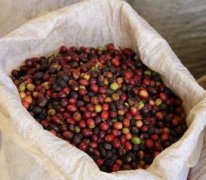
Dominica coffee is mainly produced in areas such as Cibao in the Central Mountains, the Caribbean and Barahona. There are many large estates in Siwao, and coffee trees are planted with 75% Kaddura and 25% Tibica. In terms of varieties, Baraona is the region with a high proportion of Tibika seeds.

The planting technique of Coffee
Coffee planting technology 1, growth habits coffee likes warmth, drought and cold tolerance, afraid of frost damage, seedlings and adult plants are easily defoliated to death by frost, seeds can not mature. Coffee is not strict on the land, idle land can also be planted, but with good drainage, deep soil, loose and fertile sandy soil is appropriate. Second, seed selection of planting techniques: before sowing, the germination rate of seeds should be tested. Concrete method

A brief introduction to the planting Market Price of El Salvador Pacamara Fine Coffee Bean varieties
The best place to produce the coffee is in western El Salvador, adjacent to Santa Ana, which is close to the border with Guatemala. Parkmara coffee is full-grained, and when the aroma is not too strong in El Salvador, the coffee beans rich in the Kuskabapa region are the best, slightly lighter, fragrant, pure and slightly sour. Like Guatemala and Costa Rica, El Salvador

Light aroma Puerto Rican coffee grindness taste treatment introduction to the characteristics of fine coffee varieties
In the early 18th century, coffee was introduced to Domiga from Martinique, and fine coffee was produced in the north represented by Hibao and in the south, including Okayabani Santo Domingo. Among them, the coffee produced by Santo Domingo and Barney, which is almost synonymous with domiga coffee, is a world-famous high-quality coffee. Santo Domingo coffee, which is characterized by freshness and elegance,
Planting skills of herbaceous coffee trees
First, planting time: April 15-25 period. Second, planting location: plain, hillside, wasteland, front and back house, forest and fruit tree seedlings can be planted, but should not be planted in tall trees or other unventilated places. Third, herbal coffee does not like flood and fertilizer, conditional planting can use farm manure, during the growth period, it is best to irrigate 1-2 water during the growth period, absolutely do not allow the use of all kinds of chemical fertilizers and

A brief introduction to the treatment method of grinding degree and baking degree of Santo Domingo fine coffee beans with excellent acidity
In the early 18th century, coffee was introduced to Domiga from Martinique, and fine coffee was produced in the north represented by Hibao and in the south, including Okayabani Santo Domingo. Among them, the coffee produced by Santo Domingo and Barney, which is almost synonymous with domiga coffee, is a world-famous high-quality coffee. Santo Domingo coffee, which is characterized by freshness and elegance,

Tippi Katim Coffee Flavor description characteristics of Grinding degree introduction of high-quality coffee beans in producing areas
Baoshan Lujiangba belongs to the south subtropical, northern tropical and semi-dry tropical climate, which is very suitable for the growth of small-grain coffee. The small-grain coffee grown here has the characteristics of excellent quality, fast growth, early fruit and high yield. most of the nutrients are close to or higher than those of foreign products, and the contents of crude fiber and sugar are higher than those of foreign products. As early as 1958, the international coffee tasting was held in London, England.